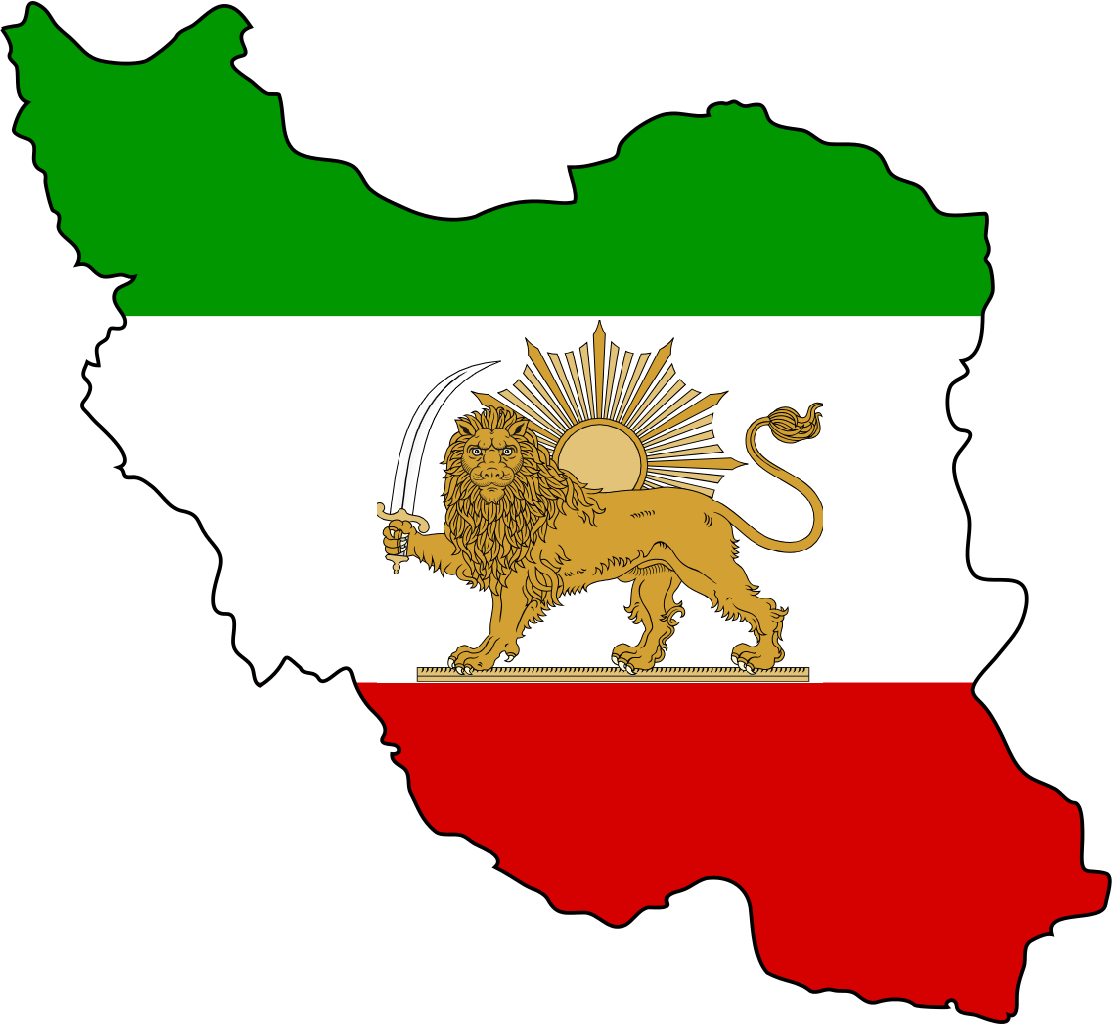
A United Voice
for IRAN

IRAN IS NOT ITS REGIME


A people
A culture
A history


— taken hostage by an extremist ideology.


FAITH IS NOT FASCISM

Islam ≠ Islamism

Religion is not the problem in Iran.
Extremism is.

Iran is not a religiously homogeneous society.
It is a country of many faiths — Muslims, Christians, Baháʼís, Zoroastrians, Jews, and others — as well as many who no longer believe at all.

After more than 40 years of religious repression, the younger generation — which makes up the majority of the population — has increasingly left religion behind.
Not because they lack spirituality, but because they have seen what happens when religion is turned into state power.

Iranians are the regime’s first victims
  — not its representatives.

A PEOPLE OLDER THAN TYRANNY

Iran did not begin in 1979.
Iran is thousands of years old.

A land of poetry, science, art, and ethics — and perhaps the earliest documented human rights.

Long before today’s rulers, Iranians built, wrote, debated, and contributed to the world we live in today.

You cannot erase a people, or thousands of years of culture,
with extremism.

HOW POWER WAS STOLEN

In 1979, Iranians did not rise up for a theocracy.
They were promised freedom — and were given oppression instead.

An extremist minority seized power.
They silenced the opposition.
They never let go.

Today’s rulers were not chosen by today’s youth.
Many of yesterday’s parents now regret the promises they once believed in.

IRANIANS ARE NOT ENEMIES OF ISRAEL
OR OF ANY OTHER NATION

They are victims of an Islamist regime that depends on conflict and manipulation to survive.


Iranians and Jews share more than 2,500 years of common history.

From the Bible, Old Testament, 2 Chronicles 36:23:

“This is what Cyrus king of Persia says:

‘The Lord, the God of heaven, has given me all the

kingdoms of the earth and he has appointed me to

build a temple for him at Jerusalem in Judah.

Any of his people among you may go up, and may the

Lord their God be with them."

IRANIANS AND THE
MODERN WESTERN WORLD

Iranian knowledge, culture, and people have long been part of the foundations on which modern Europe stands.

Through Avicenna:
    The foundations of modern medicine
    Scientific methods and clinical observation

Through al-Khwarizmi:
    The introduction of algebra
    The concept of the algorithm

Through Rumi and Hafez:
    Ideas of universal love and moral conscience
    Humanistic thought beyond nationalism and dogma

Long before modern democracies, Cyrus the Great was admired as a ruler who governed through law, tolerance, and restraint — qualities later held in high regard by the Founding Fathers of the United States.

IRANIANS, ARABS, AND A
SHARED CIVILIZATION

Iranians lived under direct Arab imperial rule for approximately 200 years.

Much of what is often described as the “Golden Age of Arab civilization” was to a large extent shaped by Iranian people, institutions, and ideas.

The formal structure of the Arabic language was systematized by Sibawayh, an Iranian scholar whose work still forms the foundation of Arabic grammar today.
Sibawayh authored Al-Kitāb and is widely regarded as the founder of Arabic grammar.

Conclusion:
Iranians have always been — and want to continue to be — part of shaping and improving the world.

Not making it worse!

IRANIANS’ REALIZATION
AFTER MORE THAN

40 YEARS OF OPPRESSION

Under the rule of the former Shah, Mohammad Reza Pahlavi, Iran underwent rapid modernization.
Living standards improved, levels of education rose, and gender equality between women and men advanced in several areas.

At the same time, certain social inequalities also increased. The rapid and intensive modernization was partly carried out without a corresponding development of political participation and public education.
This contributed to growing dissatisfaction among some segments of society.

After more than four decades of theocratic rule, many Iranians have come to the conclusion that religious freedom, freedom of expression, gender equality, stability, and security cannot be provided by an Islamist dictatorship.

THE WILL OF MANY IRANIANS
TODAY

In today’s protests, Reza Pahlavi’s name is chanted in many demonstrations as a symbol of representation during a desired transitional period
— with the goal of achieving a democratic and secular system of governance in Iran.
The Iranian diaspora echoes the slogans of the Iranian people inside Iran.

The slogan: “In akharin nabarde, Pahlavi barmigarde!”
Meaning: “This is the final battle — Pahlavi will return!”

The slogan: “Javid Shah”
Meaning: “Long live the King!”

Get involved for Iran and the future of the world

Inform yourself!
Be part of the change!  Join the domstrations.

Together, we can make a positive difference — for the entire world!

Slogans used
during demonstrations


Persian (Farsi)

  1. In akharin nabarde, Pahlavi barmigarde!

  2. Ma mardome dirinim, Iran ro pass migirim!

  3. Irani mimirad, zellat nemipazirad!

  4. Payande-IRAN!

  5. Ta akhond kafan nashavad, in vatan vatan nashavad!

Translations

  1. This is the final battle — Pahlavi will return!

  2. We are an ancient people — we will take Iran back!

  3. An Iranian would rather die, than accept humiliation!

  4. Enduring/Eternal IRAN!

  5. Until the mullah is buried, in homeland will not be a homeland!


Bisharaf  
=   shameless, dishonorable, You're a disgrace/“piece of trash” (in more colloquial, street-level language)
(Shouted by bystanders when regime militias attack demonstrators)